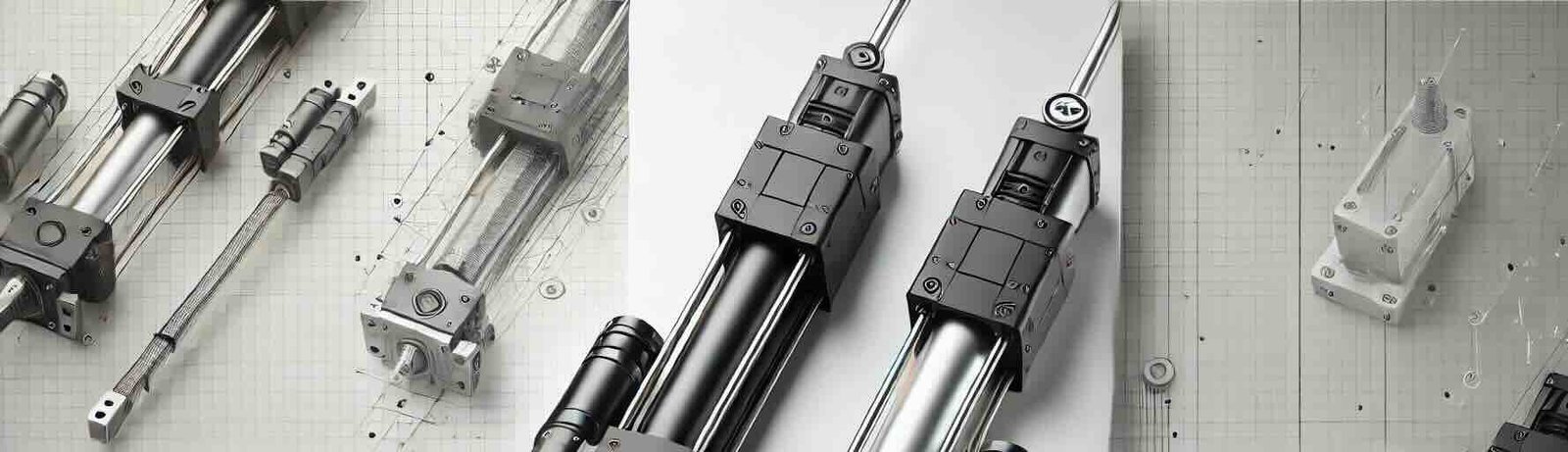
Electric actuators, also known as electric execution arrangements, are widely used in industries where precise control of motion is necessary. These actuators use single-phase or three-phase motors to drive gears or worm gears to provide linear or rotary motion. Electric actuators are known for their ability to output a relatively constant driving force, offering high stability and strong resistance to errors. They also provide higher control precision compared to pneumatic actuators. One of their key advantages is that they do not require auxiliary systems and can automatically maintain positions. However, the complex structure can lead to higher maintenance costs, and frequent adjustments can cause the motor to overheat and the gear mechanism to wear out. Additionally, electric actuators are slower compared to other systems and may struggle with large driving forces, resulting in challenges like difficult overload protection and poor positioning.
These actuators are well-suited for on/off operations, especially in power plants or nuclear power stations.
Electro-Hydraulic Actuators: High Precision and Strength
In contrast to electric actuators, electro-hydraulic actuators (EHA) are powered by hydraulic fluid rather than electricity. They are particularly suitable for applications requiring large thrust, long strokes, and high-precision control. The input signal for these actuators is electrical, and the output is a hydraulic force transmitted through hydraulic oil. The mechanical energy from an electric motor is converted into hydraulic pressure, which drives the actuator to produce linear or rotational motion.
Compared to pneumatic and electric actuators, electro-hydraulic actuators offer significantly larger thrust or torque and faster response times. Their precision in stroke positioning is also exceptional. However, hydraulic systems require complex piping and oil circuits for control. The oil’s temperature and pressure must be carefully regulated, and there is a need for periodic oil replacement and circulation.
The Role of Servo Valves in Electro-Hydraulic Actuators
Servo valves play a crucial role in electro-hydraulic systems. They control the flow and pressure of the output medium, ensuring that the actuator performs with high dynamic response, accuracy, and durability. This technology has evolved into a key component in industries such as aerospace, metallurgy, and chemical engineering, due to its fast dynamic response, high control precision, and long operational life.
Conclusion: Choosing the Right Actuator for Your Needs
When deciding between electric actuators and electro-hydraulic actuators, it’s essential to consider the specific needs of the application. Electric actuators are ideal for precise, stable control without the need for complex auxiliary systems. However, for applications that require high force and precision, electro-hydraulic actuators offer superior performance with faster response times and higher thrust capabilities. Understanding the operational requirements of your system will guide you to the best actuator choice for your needs.