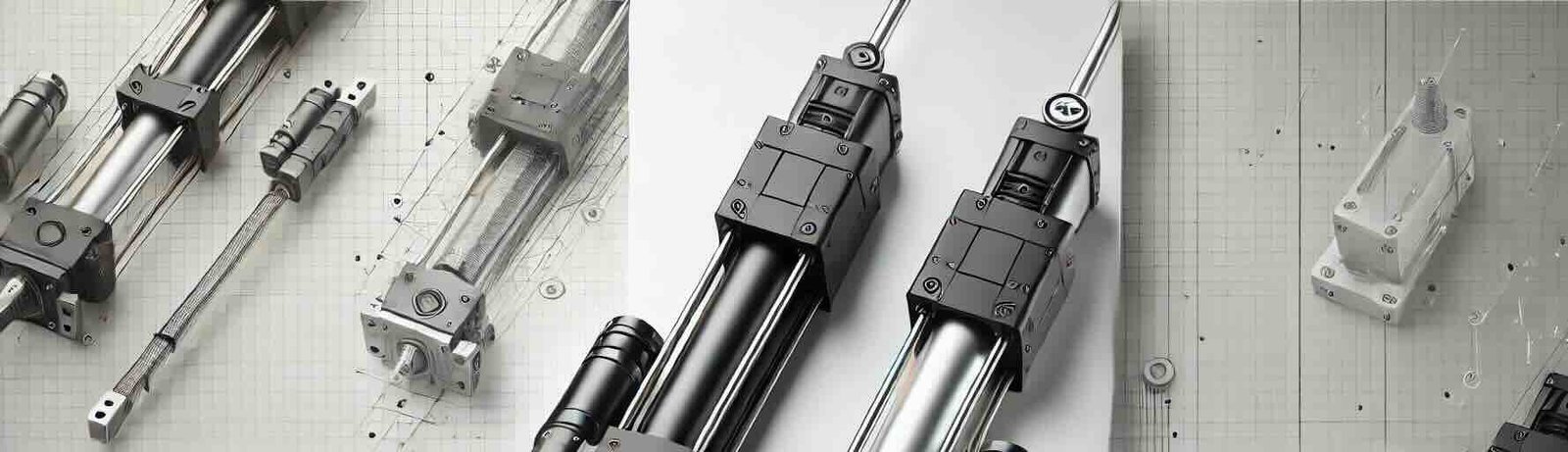
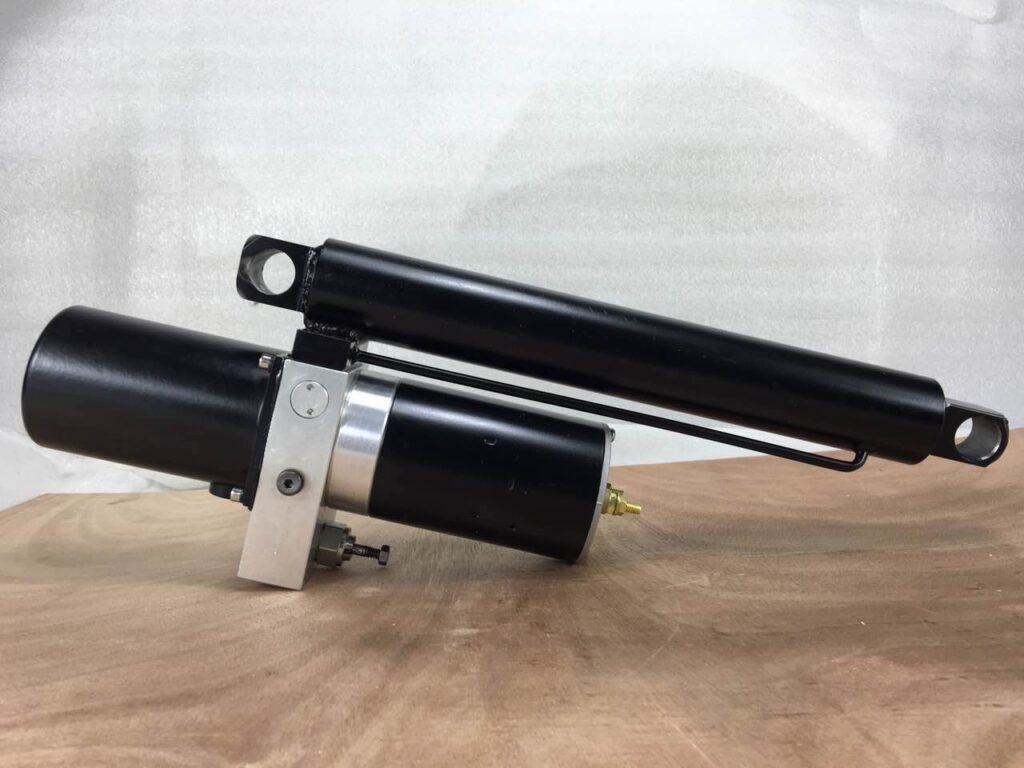
An electro-hydraulic actuator is a device that combines electrical control and hydraulic drive, widely used in industries like automation, aerospace, energy, metallurgy, and more. Its performance mainly shines in areas like high precision, fast response, powerful output, reliability, and adaptability. Let’s break down these aspects in detail.
- High Precision
Electro-hydraulic actuators can achieve high-precision control over position, speed, and force through electrical signals controlling the hydraulic system. The closed-loop control system can monitor the actuator’s output in real-time and adjust based on feedback, ensuring precise movements. For example, in CNC machines, these actuators can achieve micron-level precision for high-accuracy processing. The hydraulic system also has high rigidity, resisting external load interference and improving control accuracy.
- Fast Response
Electro-hydraulic actuators tend to respond faster than purely electric actuators, especially under heavy loads. The hydraulic system has a high power density, enabling it to output large forces and torque quickly while maintaining a fast response. For instance, in aerospace, these actuators are used to control aircraft control surfaces, acting within milliseconds to ensure stability and safety. The hydraulic system can also optimize response speed by adjusting flow rates and pressure to fit different application needs.
- Large Output Force
The hydraulic system in electro-hydraulic actuators is capable of generating large forces and torques, making them suitable for heavy-duty applications. For example, in metallurgy, these actuators control rolling mill gaps, working stably under high loads to ensure precision and product quality. The hydraulic system can further boost output force by increasing cylinder size or system pressure, accommodating varying application demands.
- Strong Reliability
The hydraulic system of electro-hydraulic actuators is highly reliable, performing well in harsh environments. The components are often made from high-strength materials with good wear resistance and corrosion resistance, making them capable of working under extreme conditions like high temperatures, high pressures, and high humidity. For example, in the oil and gas industry, these actuators control valves and pipelines in high-pressure environments, ensuring safe production. The system also has redundancy, so even if some parts fail, it can keep working, enhancing reliability.
- Great Adaptability
Electro-hydraulic actuators are highly adaptable, able to handle different application scenarios and work conditions. The hydraulic system can optimize performance by adjusting flow, pressure, and temperature to meet varying load and speed requirements. For example, in construction machinery, these actuators control excavator arms and buckets, adjusting system parameters based on the specific work conditions to ensure smooth operation. Extra components like accumulators and filters can also be added to improve the system's adaptability and reliability.
- Energy Efficient and Eco-Friendly
As energy efficiency and environmental concerns grow, electro-hydraulic actuators have made significant progress in energy saving. Modern actuators often use technologies like variable frequency drive (VFD) and load-sensing control, adjusting hydraulic flow and pressure based on actual needs to reduce energy consumption. For example, in injection molding machines, electro-hydraulic actuators use VFD to match hydraulic system flow and pressure to the molding process, cutting electricity use and reducing production costs. Plus, eco-friendly hydraulic oils are often used, minimizing environmental pollution.
- Easy Maintenance
The hydraulic systems of electro-hydraulic actuators are designed for easy maintenance, often using modular components. The parts are standardized for easy replacement and repair. In the maritime industry, for example, electro-hydraulic actuators control steering gears and anchor winches, allowing quick part swaps through modular designs to reduce downtime and improve efficiency. The systems often include fault diagnostics to monitor performance, quickly detect issues, and streamline repairs, boosting system reliability and maintenance efficiency.
- Wide Applications
Electro-hydraulic actuators have diverse applications across multiple industries like industrial automation, aerospace, energy, metallurgy, construction machinery, shipping, and oil & gas. For example, in industrial automation, they’re used to control robotic arms, conveyors, and assembly lines for high-precision, high-speed, and high-load operations. In aerospace, they control aircraft control surfaces, landing gear, and engines, ensuring stability and safety. In the energy sector, they control turbines, wind turbines, and nuclear reactors, ensuring reliable equipment operation.