
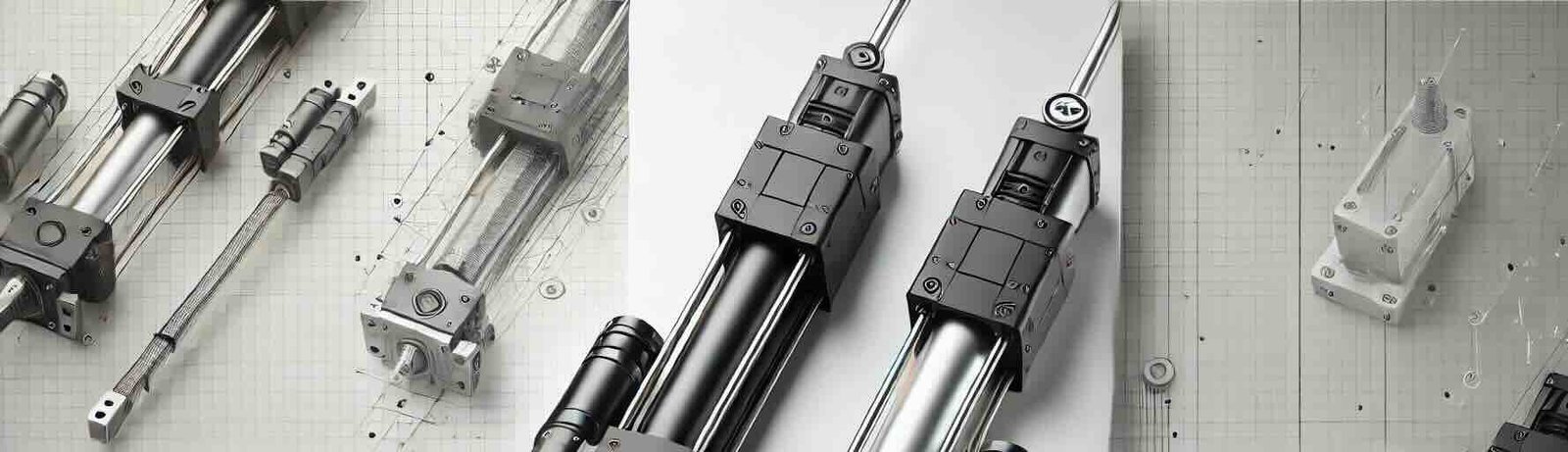
An electro-hydraulic actuator is a device that converts electrical energy into hydraulic energy to drive mechanical motion. It is widely used in industrial automation, aerospace, marine, and heavy machinery applications, particularly in scenarios requiring high precision, large thrust, and fast response. To achieve rapid response, the design and control strategies of electro-hydraulic actuators must be optimized across multiple aspects. Below are the key technologies and measures to enhance the rapid response of electro-hydraulic actuators:
1. Optimizing Hydraulic System Design
The design of the hydraulic system directly impacts the actuator’s response speed. Key optimization measures include:
- Reducing Pipeline Length and Volume: The flow time of hydraulic fluid in pipelines affects the actuator’s response speed. Shortening pipeline length and reducing volume minimize fluid travel time, improving response speed.
- Selecting High-Flow Hydraulic Valves: The flow rate of hydraulic valves determines the speed of hydraulic fluid. Choosing high-flow, low-response-time valves significantly enhances system dynamics.
- Optimizing Hydraulic Cylinder Design: The piston area and stroke of the hydraulic cylinder affect speed and thrust. Reducing piston area and stroke, while meeting thrust requirements, can improve response speed.
2. Using High-Performance Electro-Hydraulic Servo Valves
The servo valve is a core component of the electro-hydraulic actuator, directly influencing response speed and control precision. Key considerations include:
- Selecting High-Frequency Servo Valves: High-frequency servo valves can quickly adjust hydraulic fluid flow and pressure, reducing response time.
- Improving Servo Valve Control Precision: Optimizing valve structure and control algorithms enhances dynamic performance and stability.
- Reducing Valve Spool Inertia and Friction: Inertia and friction in the valve spool can slow response. Using lightweight materials and low-friction designs minimizes these effects.
3. Optimizing Control Strategies
Control strategies are critical for improving the response speed of electro-hydraulic actuators. Effective methods include:
- PID Control: The traditional PID (Proportional-Integral-Derivative) control algorithm adjusts parameters to achieve fast response and stable control. Optimizing PID parameters further improves dynamic performance.
- Feedforward Control: By predicting system input signals, feedforward control reduces response delays, enhancing actuator speed.
- Adaptive Control: Adaptive control automatically adjusts parameters based on system dynamics, maintaining fast response under varying loads or uncertain conditions.
- Fuzzy Control: Fuzzy control mimics human decision-making, enabling fast response and stable control in complex, nonlinear systems.
4. Enhancing Drive Motor Performance
The drive motor, which converts electrical energy into hydraulic energy, is a critical component. Optimization measures include:
- Choosing High-Power-Density Motors: These motors deliver greater torque in less time, improving actuator response speed.
- Improving Motor Control Precision: High-performance motor drivers and control algorithms enhance dynamic performance.
- Reducing Motor Inertia and Friction: Lightweight designs and low-friction materials minimize inertia and friction, boosting response speed.
5. Reducing System Inertia and Friction
System inertia and friction significantly affect actuator response speed. Optimization measures include:
- Lightweight Design: Using lightweight materials and optimized structures reduces actuator inertia, improving response speed.
- Minimizing Mechanical Friction: Low-friction materials and optimized mechanical structures reduce friction, enhancing dynamic performance.
6. Optimizing Hydraulic Fluid Selection and Use
The performance of hydraulic fluid directly impacts actuator response speed. Optimization measures include:
- Choosing Low-Viscosity Hydraulic Fluid: Low-viscosity fluids flow more easily, reducing travel time in pipelines and improving response speed.
- Maintaining Fluid Cleanliness: Contaminants in hydraulic fluid can impair valve and actuator performance. Regular fluid replacement and filtration ensure cleanliness, enhancing response speed.
7. Using Advanced Sensors and Feedback Control
Sensors and feedback control are crucial for improving response speed and precision. Optimization measures include:
- Selecting High-Precision Sensors: These sensors monitor position, speed, and pressure in real time, improving control accuracy and response speed.
- Implementing Closed-Loop Control: Closed-loop control uses real-time feedback to adjust control signals quickly, enhancing dynamic performance.
8. Reducing System Time Delays
Time delays in the system can hinder actuator response speed. Optimization measures include:
- Optimizing Signal Transmission Paths: Shortening transmission paths and using high-speed communication protocols reduce signal delays.
- Increasing Controller Processing Speed: High-performance controllers and optimized algorithms reduce computation time, improving system response speed.
By implementing these technologies and measures, electro-hydraulic actuators can achieve faster response times, higher precision, and improved performance across various applications.