
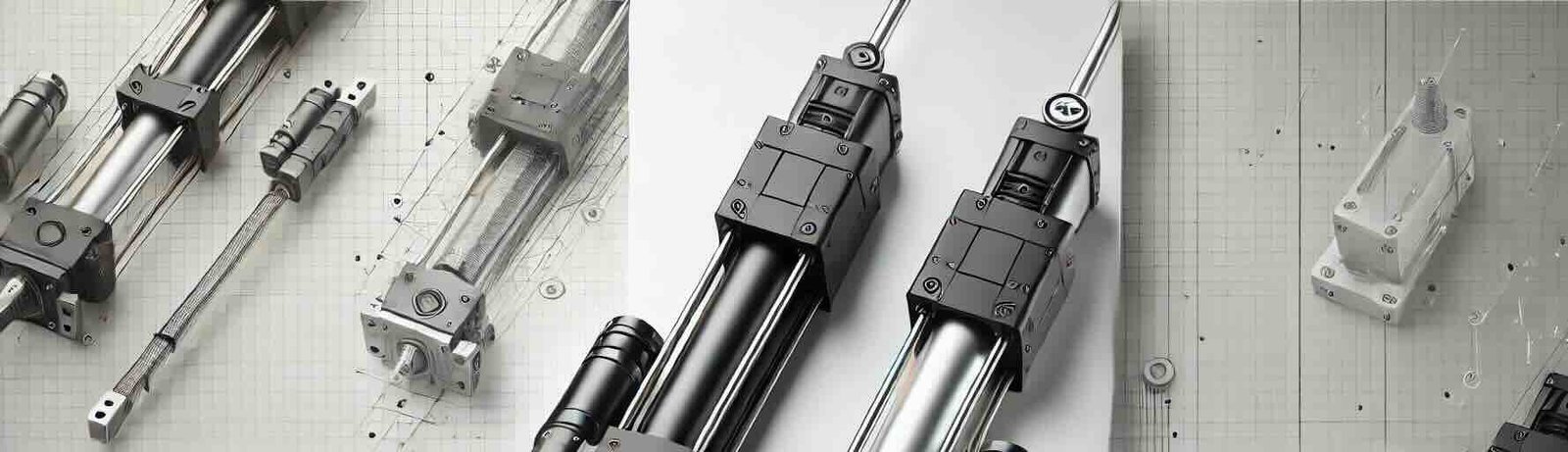
The overhaul of servo valves includes repairing motor overcurrent faults, typically requiring routine inspections of the motor’s main components, such as the stator, rotor, brake, and encoder. Below, we briefly outline the operational process and technical requirements for servo valve repair.

First, record the details of the servo valve submitted for repair, including its model, specifications, manufacturer, production date, product serial number, user organization, and the issues reported by the user.
Next, inspect the servo valve’s appearance to ensure it is intact, checking for any missing parts or loose connecting screws. Document the condition of the valve.
Then, perform an electrical inspection using a multimeter to measure the servo valve’s electrical connector. Record the DC resistance of the control winding and its resistance to ground (housing). For servo valves equipped with displacement sensors, measure and record the DC resistance of the sensor winding and its resistance to ground (housing). For three-stage electro-hydraulic servo valves with built-in circuit control boards, in addition to checking the control winding of the pilot stage, refer to the valve’s technical documentation to verify the definition and impedance values of each pin on the electrical connector, and document the results. If no abnormalities are found during these inspections, proceed to the next steps. If issues are identified, address them effectively before continuing.
Finally, after completing the above inspections and addressing any abnormalities, conduct a preliminary test on a test bench. Install the repaired servo valve on the test bench either via a transition plate or directly, ensuring that the valve’s inlet and outlet ports align with the pressure oil port and return oil port on the test bench. Verify whether the servo valve requires pilot supply and return oil; if so, connect these to the corresponding ports on the test bench. Check if the servo valve has a leakage oil port, and if present, ensure it drains to the tank without pressure. Connect the wiring according to the technical data and wiring diagram of the repaired servo valve. For nozzle-flapper servo valves, which typically require small control current signals, use a low-current output amplifier. For moving-coil servo valves, use a medium-current output amplifier. For high-frequency moving-coil servo valves or large-current proportional valves, use a high-current output amplifier. For three-stage electro-hydraulic servo valves with built-in circuit control boards, follow the wiring diagram in the valve’s technical documentation. When connecting, pre-adjust the voltage for positive and negative DC power supply as required, measure the polarity, and connect the wires with the power off. The output signal from the displacement sensor can be directly connected to an oscilloscope for observation.