
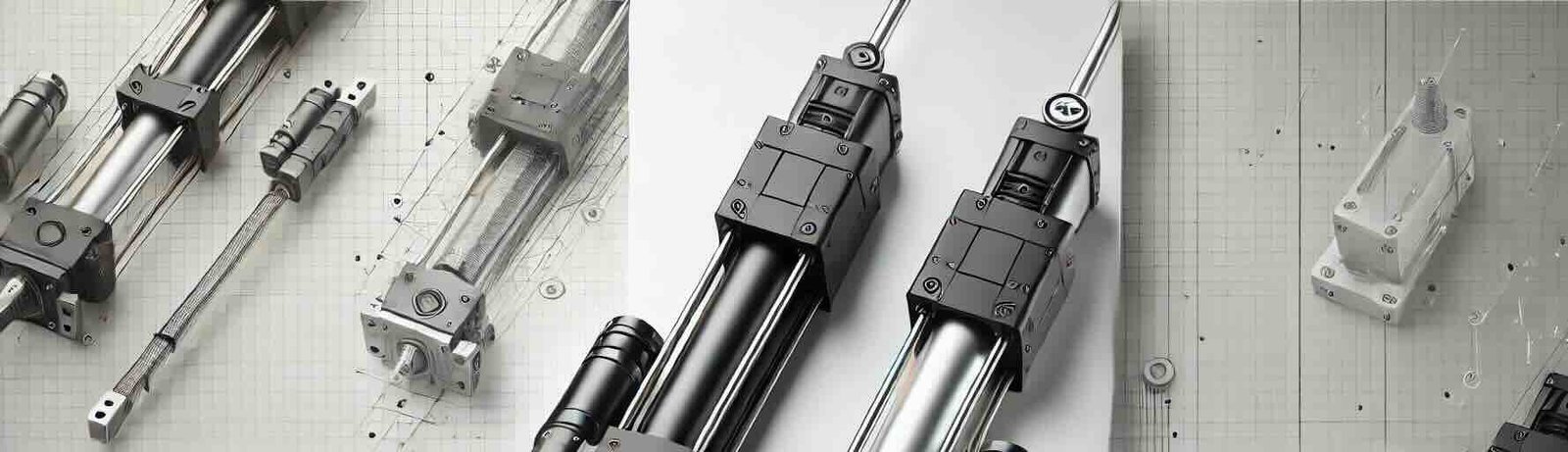
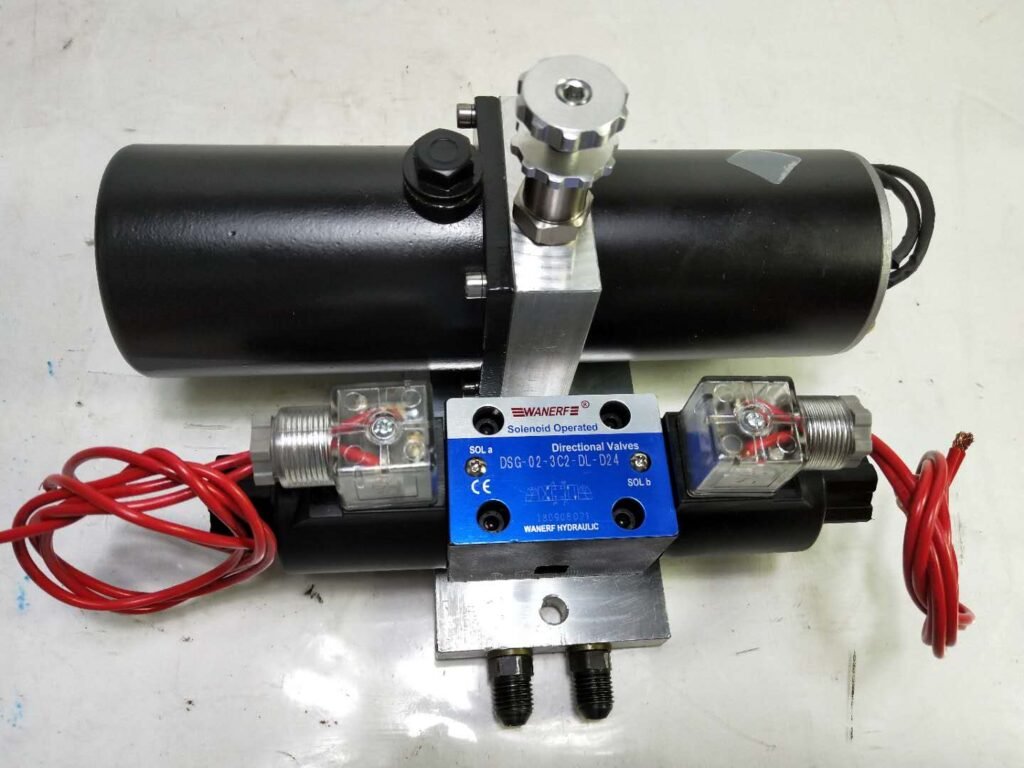
The electro-hydraulic actuator is a device that converts electrical energy into hydraulic energy, which in turn drives mechanical motion. It is widely used in industrial automation, aerospace, construction machinery, and other fields. The performance of an electro-hydraulic actuator directly impacts the stability, precision, and reliability of a system, making performance testing a critical step to ensure it meets design requirements. Below are the primary methods for testing the performance of electro-hydraulic actuators:
1. Static Performance Testing
Static performance testing evaluates the actuator's performance under steady-state conditions, including output force, displacement accuracy, and static stiffness.
1.1 Output Force Testing
Output force is a key performance indicator for electro-hydraulic actuators. During testing, an external load is applied to the actuator using a loading device, and the output force is measured under varying input signals. The test setup typically includes force sensors, a data acquisition system, and a loading mechanism. Ensuring load stability and measurement accuracy is essential during the process.
1.2 Displacement Accuracy Testing
Displacement accuracy reflects the actuator’s ability to control position under steady-state conditions. The test involves sending a target position signal and measuring the actuator’s actual displacement, comparing it to the target value. Equipment includes displacement sensors and high-precision measurement instruments. Repeated tests can evaluate the actuator’s repeatability and linearity.
1.3 Static Stiffness Testing
Static stiffness measures the actuator’s resistance to deformation under static load. During testing, a specific load is applied, and the resulting displacement is measured. Higher static stiffness indicates less deformation under load, contributing to better system stability.
2. Dynamic Performance Testing
Dynamic performance testing assesses the actuator’s response speed, frequency characteristics, and stability under dynamic conditions.
2.1 Step Response Testing
Step response testing is a common method to evaluate dynamic performance. A step input signal is applied, and the actuator’s displacement, velocity, and force changes over time are recorded. By analyzing response time, overshoot, and steady-state error, the actuator’s dynamic response characteristics can be assessed.
2.2 Frequency Response Testing
Frequency response testing evaluates the actuator’s performance across different frequencies. A sinusoidal input signal is applied, and the output amplitude and phase shift are measured as frequency varies. By plotting amplitude-frequency and phase-frequency curves, the actuator’s bandwidth, resonant frequency, and phase margin can be analyzed.
2.3 Stability Testing
Stability testing assesses the actuator’s ability to maintain stable operation under dynamic loads or disturbances. By simulating real-world load variations or external disturbances, the actuator’s output stability is observed. Common methods include step load testing and sinusoidal load testing.
3. Efficiency Testing
Efficiency testing evaluates the energy conversion efficiency of the electro-hydraulic actuator, including the conversion from electrical to hydraulic energy and from hydraulic to mechanical energy.
3.1 Electrical to Hydraulic Energy Conversion Efficiency
This test measures the input electrical power and output hydraulic power to calculate conversion efficiency. Input electrical power is determined by measuring current and voltage, while output hydraulic power is calculated from flow rate and pressure measurements.
3.2 Hydraulic to Mechanical Energy Conversion Efficiency
This test measures the input hydraulic power and output mechanical power to calculate conversion efficiency. Input hydraulic power is derived from flow rate and pressure, while output mechanical power is determined by force and velocity measurements.
4. Durability Testing
Durability testing assesses the actuator’s reliability and lifespan under prolonged use.
4.1 Fatigue Life Testing
Fatigue life testing simulates cyclic loading under real-world conditions to evaluate the actuator’s fatigue lifespan. Periodic loads are applied, and performance changes or failures are recorded. Test data can be used to predict the actuator’s service life.
4.2 Environmental Adaptability Testing
Environmental adaptability testing evaluates the actuator’s performance under various environmental conditions, including high/low temperatures, humidity, vibration, and shock. By simulating real-world operating environments, the actuator’s environmental resilience and reliability can be assessed.
5. Sealing Performance Testing
Sealing performance testing checks for leaks in the actuator’s hydraulic system.
5.1 Static Sealing Testing
Static sealing testing is conducted under no-load conditions by pressurizing the hydraulic system and checking for leaks. A specific pressure is applied, and any leakage is observed.
5.2 Dynamic Sealing Testing
Dynamic sealing testing is performed under load conditions, simulating real-world motion to evaluate the hydraulic system’s sealing performance. Periodic loads are applied, and any leakage is monitored.
6. Noise Testing
Noise testing evaluates the noise levels generated by the actuator during operation.
6.1 Sound Pressure Level Testing
Sound pressure level testing measures the actuator’s noise level during operation using a sound level meter and noise analyzer.
6.2 Spectrum Analysis
Spectrum analysis identifies noise sources by analyzing the frequency characteristics of the noise. Equipment includes a spectrum analyzer and microphone array.
7. Safety Testing
Safety testing evaluates the actuator’s safety performance under abnormal conditions.
7.1 Overload Protection Testing
Overload protection testing simulates overload conditions to assess the actuator’s protective mechanisms. Loads exceeding the rated capacity are applied, and the actuator’s ability to automatically stop or issue an alarm is observed.
7.2 Power Failure Protection Testing
Power failure protection testing simulates sudden power loss to evaluate the actuator’s ability to stop safely. The power is abruptly cut, and the actuator’s response is monitored.
These testing methods ensure that electro-hydraulic actuators meet performance, reliability, and safety standards for their intended applications.