
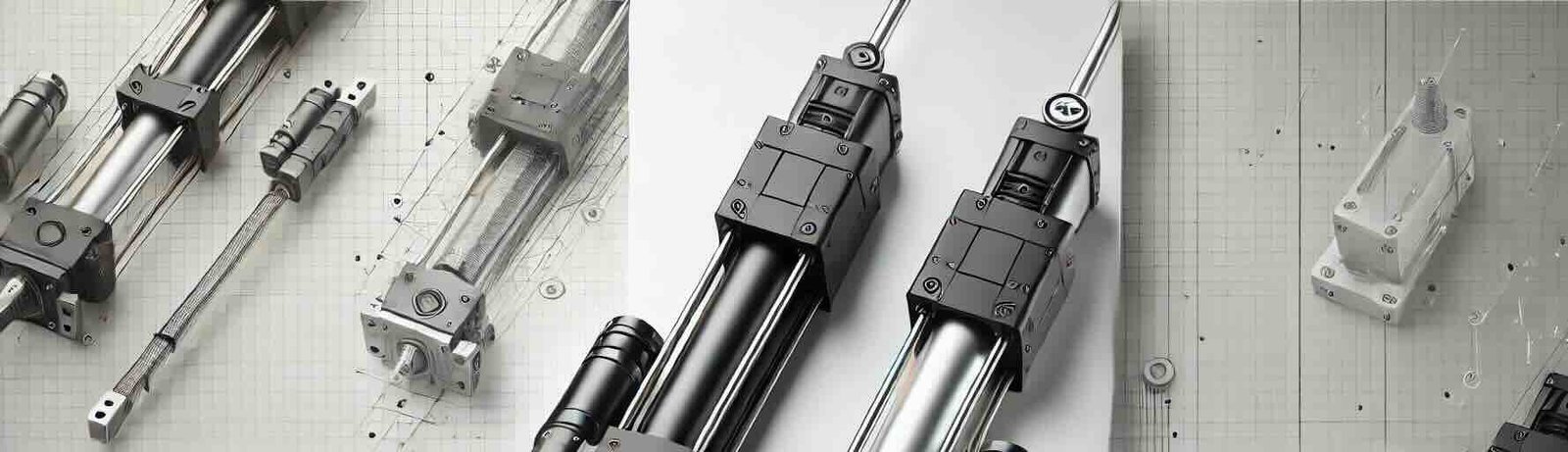
Electrohydraulic actuators are a crucial component of automatic control systems. Their function is to receive control signals from a controller and alter the pressure of the controlled medium to maintain the controlled variable at a desired value or within a certain range. Actuators can be categorized into three types based on their energy source: pneumatic, hydraulic, and electric. Pneumatic actuators use compressed air as their energy source, offering simple structure, reliable and stable operation, high thrust, easy maintenance, fire and explosion resistance, and low cost. Therefore, they are widely used in chemical, papermaking, oil refining, and other production processes. They can be easily used with passive instruments. Pneumatic actuators can also be used when using an electric meter or computer control, as long as the electrical signal is converted to a standard pressure signal of 20-100 kPa via an electro-pneumatic converter or electro-pneumatic valve positioner. Electric actuators are easy to use and offer fast signal transmission, but they are complex and have poor explosion-proof performance. Hydraulic actuators are generally not used in chemical, oil refining, and other production processes, and are characterized by their high output thrust.
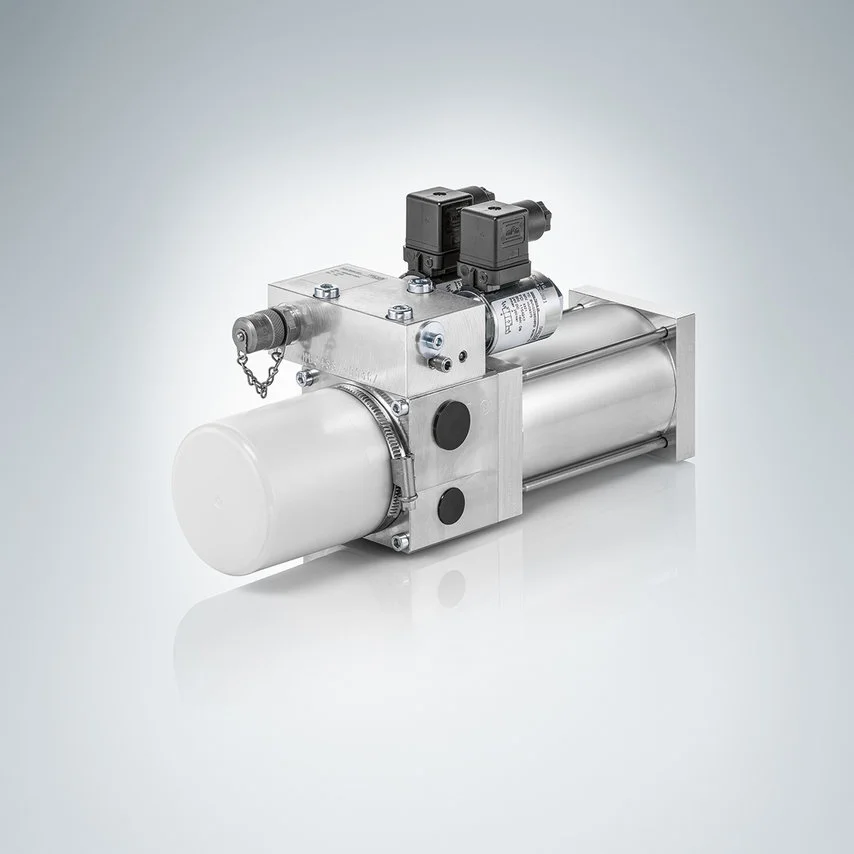
An electro-hydraulic actuator includes a master cylinder and a motor. The master cylinder includes a hydraulic cylinder and a piston with one end extending into the hydraulic cylinder and capable of linear motion relative to the cylinder. The motor includes a stator and a rotor rotatable relative to the stator. The piston is driven by the motor rotor. The electro-hydraulic actuator also includes an electro-mechanical brake device for selectively braking the motor rotor. By using the electro-mechanical brake device to brake the motor rotor, the electro-hydraulic actuator maintains a high pressure in the hydraulic circuit, consuming less energy and avoiding the high energy consumption and heat generation required by existing electro-hydraulic actuators to maintain high pressure in the hydraulic circuit.
The piston is characterized by a large head portion, the size of which prevents it from entering the hydraulic cylinder. The electro-hydraulic actuator also includes an electro-mechanical brake device for selectively braking the rotor. The electro-mechanical brake device includes an electromagnet fixed relative to the motor stator and a brake pad attached to the end of the motor rotor and capable of rotating therewith. The brake pad is attached to the motor rotor via an elastic element.
As a power device, actuators integrate pneumatics, hydraulics, control, electromechanical, computer, and communications technologies to quickly and stably accurately control the position of controlled objects. They are not only used to drive and control various valves, but are also widely used in numerous applications requiring power, such as electricity, water conservancy, metallurgy, papermaking, aerospace, pipelines, petrochemicals, industrial equipment, and food processing.
Electrohydraulic actuators integrate a control module and a hydraulic power module and are available in linear and angular travel versions. The control module issues commands to an intelligently controlled motor or servo valve, which controls the hydraulic power module to output force (or torque) in the form of linear (or angular) displacement, thereby driving the controlled object. The displacement response completes the conditioning process and achieves various functional control functions.